
What Is Modified Food Starch? Native vs Modified vs Clean-Label Starch Guide
Published by Angel Starch & Food Technical Formulation Desk • 7 min read
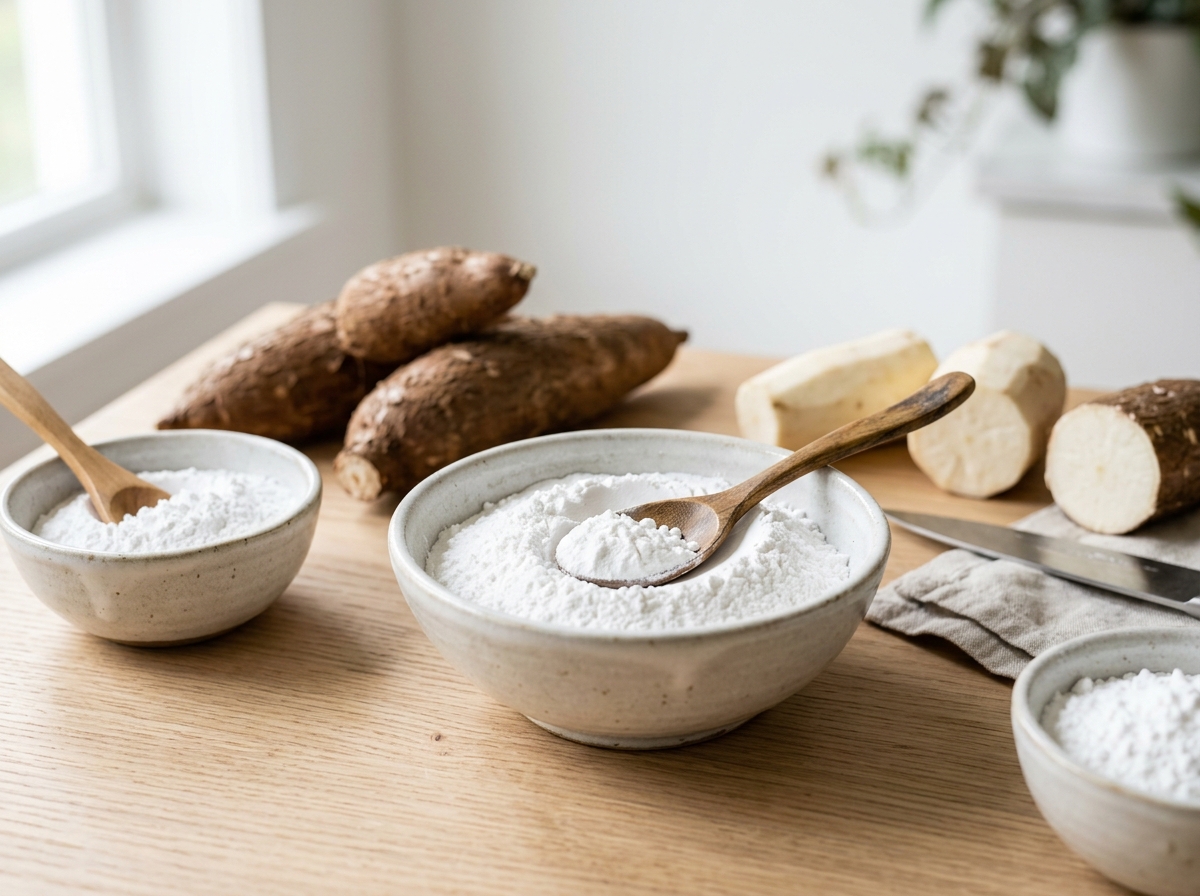
Whether you are formulating a retorted soup, a refrigerated dressing, or a gluten-free bakery mix, one of the first decisions on the spec sheet is choosing between native starch, modified food starch, and a clean-label functional starch.
What Is Modified Food Starch?
Modified food starch is starch extracted from a plant crop—typically tapioca (cassava), corn (maize), waxy maize, or potato—that has been physically, enzymatically, or chemically treated within FDA food additive regulations (21 CFR 172.892) to improve its functional performance during commercial food processing.
Important distinction: "Modified" in modified food starch does NOT mean genetically modified (GMO). It refers strictly to modifying the starch granules' physical or chemical cross-linking and stabilization so the starch does not break down under high heat, acid, mechanical shear, or freezing.
Common functional grades include distarch phosphate / phosphated distarch phosphate (E1412 / E1413, such as Angel RS 3700 TS ULV3), acetylated starch (E1420), acetylated distarch adipate (E1422), and hydroxypropyl distarch phosphate (E1442).
Native vs Modified Starch: Why Native Starch Isn't Always Enough
Native starch (such as Angel Tapioca Starch, Angel Potato Starch 20M, or Angel Maize Starch - Native) is pure, untreated plant starch. It works beautifully in gentle batch cooking, baked goods, dry mixes, and noodles. However, when native starch granules are subjected to high-shear homogenizers, low-pH acid (like ketchup or salad dressing), or blast freezing, the swollen granules rupture or retrograde—leading to viscosity loss and water weeping (syneresis). Modified starches are cross-linked to reinforce the granule wall against these stresses.
Is Modified Food Starch Gluten-Free?
In the United States, modified food starch made from tapioca, corn (maize), waxy maize, or potato is naturally gluten-free. Under FALCPA (Food Allergen Labeling and Consumer Protection Act), if modified food starch were derived from wheat, "Wheat" must be explicitly declared on the label. Furthermore, for products carrying a "gluten-free" claim under FDA 21 CFR 101.91, the finished product must contain less than 20 ppm gluten. All Angel Starch tapioca, potato, and maize grades are derived from non-wheat botanical sources.
What Is Clean Label Starch (and Physically Modified Starch)?
Many consumers today prefer ingredient panels without "food starch-modified" or E-numbers. A clean label alternative to modified starch—often produced as a physically modified starch or hydrothermal functional native starch—achieves high process tolerance, shear resistance, and cold-water swelling without chemical reagents.
Because no chemical modification occurs, clean-label starches (such as Angel ClaTap – Prima 300 WMT-V2, Angel Cleation 3300-V12, and Angel CWS TS – Pregel Tapioca Starch) can typically be declared simply as "Tapioca Starch" or "Native Starch" on U.S. ingredient labels while delivering stable viscosity in sauces, yogurts, and dressings.
Need Samples or Technical Guidance for Your Trials?
Angel Starch & Food Inc. supplies USDA Organic and conventional tapioca starches, cassava flours, and clean-label functional starches to US food makers. Free evaluation samples dispatch in 5 to 7 days.