
Tapioca Starch vs Cornstarch: Viscosity, Clarity, Freeze-Thaw & Flavor Compared
Published by Angel Starch & Food Technical Formulation Desk • 6 min read
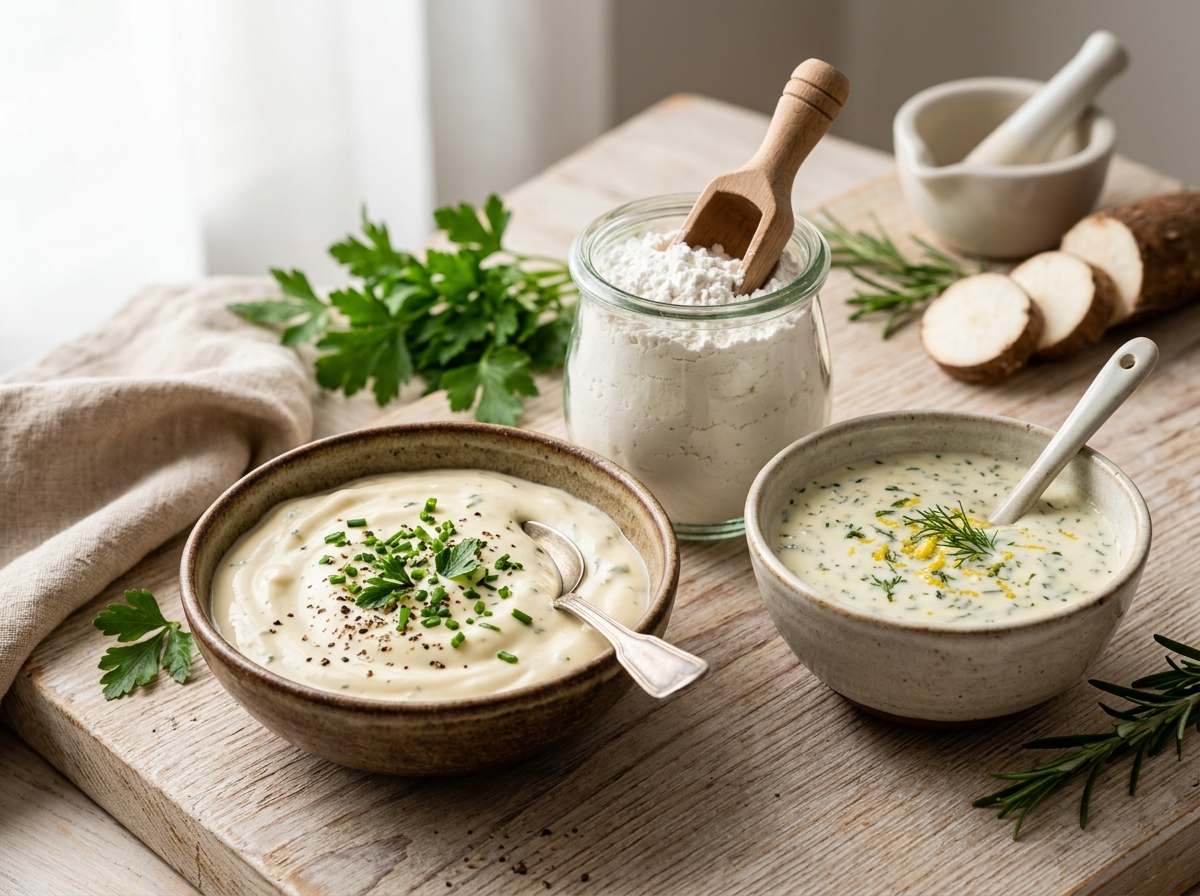
When formulating sauces, pie fillings, dairy desserts, batters, or gluten-free baked goods, choosing between tapioca starch vs cornstarch (maize starch) has a major impact on processing temperature, visual gloss, mouthfeel, and shelf-life stability.
1. Botanical Source & Flavor Profile
- **Tapioca Starch** (such as Angel Tapioca Starch and Organic Tapioca Starch) is a root starch extracted from cassava. It has very low residual protein and lipid content, resulting in an ultra-clean, neutral flavor that never masks delicate fruit, dairy, or savory notes.
- **Cornstarch / Maize Starch** (such as Angel Maize Starch - Native and Organic Maize Starch) is a cereal starch extracted from corn endosperm. It provides classic body in gravies and bakery goods, though delicate formulas sometimes detect a mild cereal note if undercooked.
2. Gelatinization Temperature & Cooking Speed
- **Tapioca Starch** gelatinizes at a lower temperature (approx. 58°C–65°C / 136°F–149°F), thickening more quickly and requiring less thermal energy during batch cooking.
- **Cornstarch** requires higher cooking temperatures (approx. 62°C–72°C / 144°F–162°F) and must be held near boiling briefly to eliminate raw starch taste and reach full viscosity.
3. Paste Clarity, Gloss & Gel Texture
- **Tapioca Starch** forms a translucent, high-gloss, long/cohesive paste that stays soft and spoonable when cooled—ideal for fruit pie fillings, glazes, Asian sauces, and chewy bakery textures.
- **Cornstarch** contains higher linear amylose (~25%–28%), which retrogrades upon cooling to form a short, opaque, cuttable gel—making it ideal for molded puddings, custards, gumdrops, and crispy fry batters where firm gel set is desired.
4. Freeze-Thaw Stability
Because standard dent cornstarch has higher amylose retrogradation, it tends to weep water (syneresis) and turn spongy after freezing and thawing. Native tapioca starch—and especially clean-label functional starches like Angel ClaTap – Prima 300 WMT-V2—exhibits much better refrigerate and freeze-thaw stability.
Angel Starch supplies both bulk native/organic tapioca starch and native/organic maize starch so your R&D team can test both side-by-side.
Need Samples or Technical Guidance for Your Trials?
Angel Starch & Food Inc. supplies USDA Organic and conventional tapioca starches, cassava flours, and clean-label functional starches to US food makers. Free evaluation samples dispatch in 5 to 7 days.